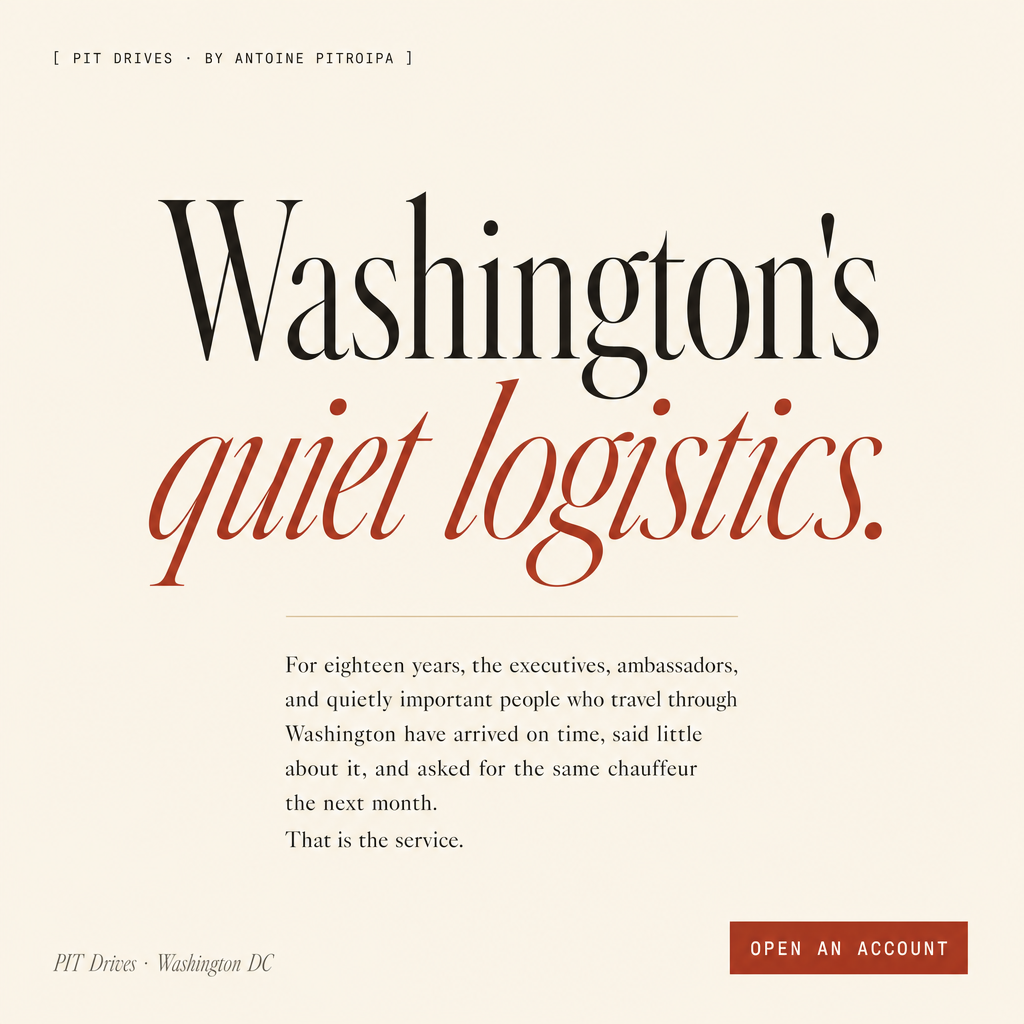
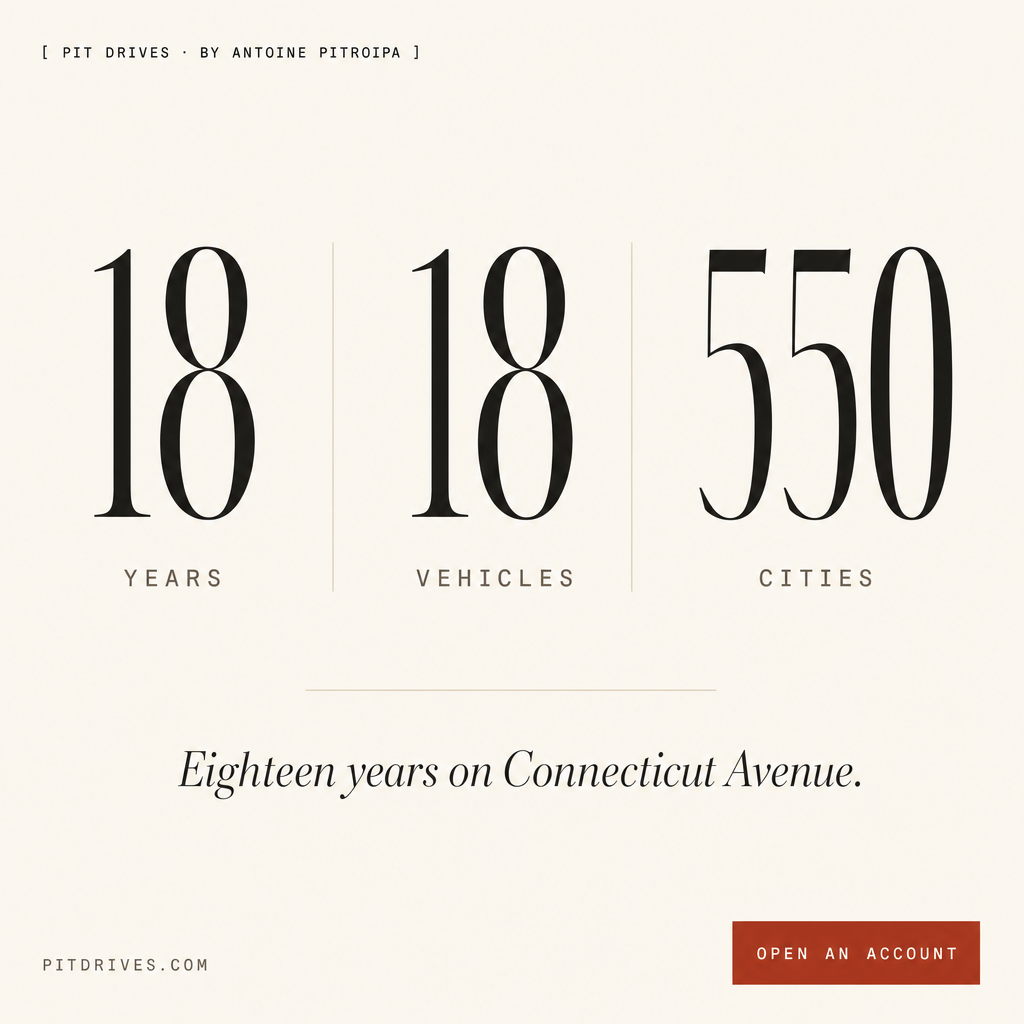
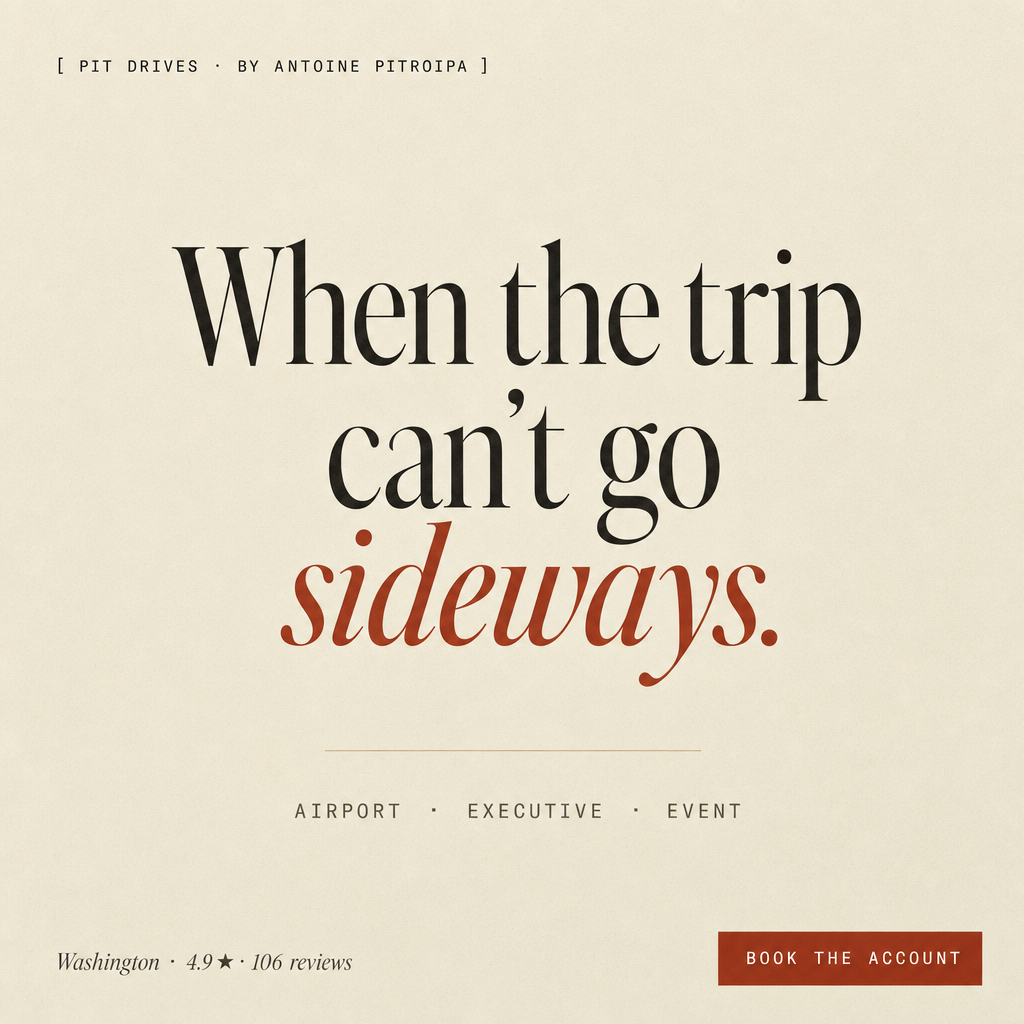
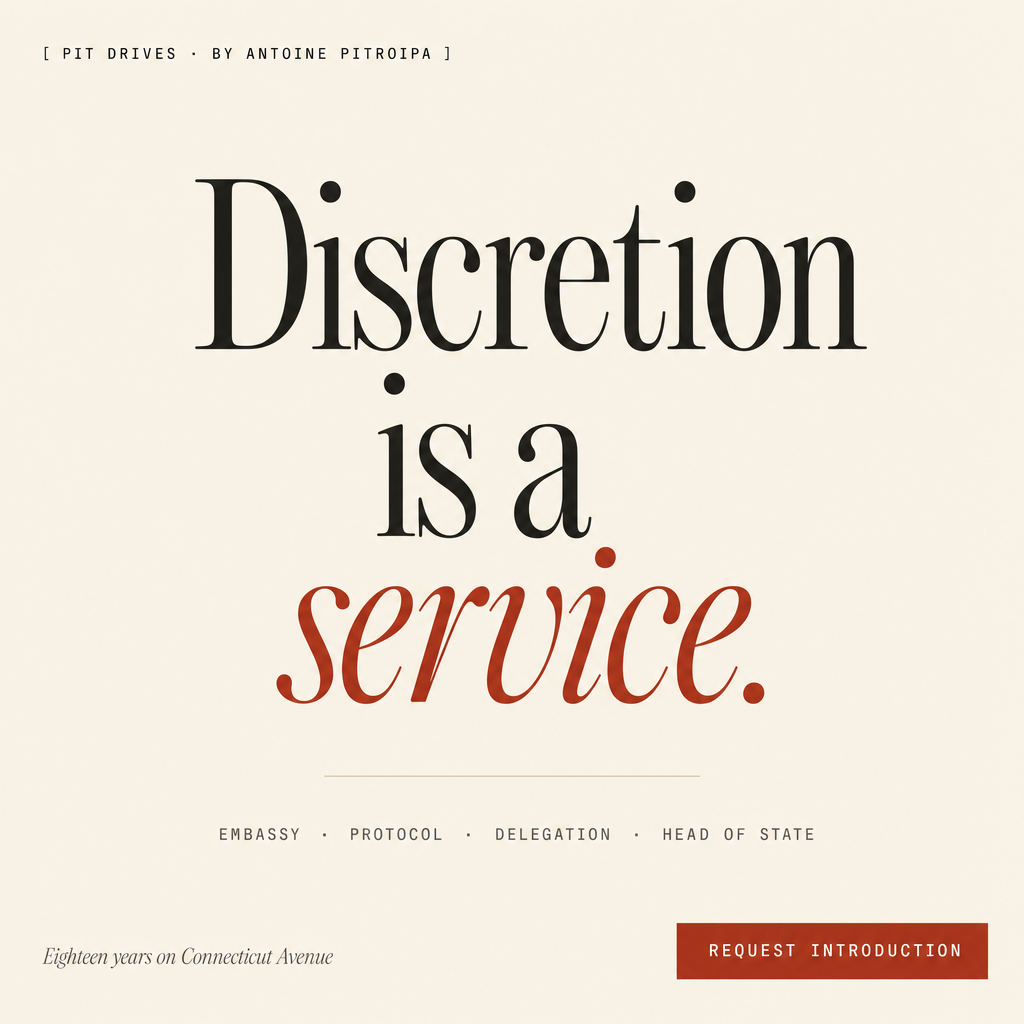
A directional creative pack — six fully-composed concept frames showing how AYMI would speak to the buyer set the proposal names. Three persona-led wedges into the corporate-accounts engine. Three brand-led tiles that move the 4.9-star asset onto every surface where it belongs.
The pack is structured as two doors because the proposal names two distinct buyer realities. The persona door speaks to the EA who books Friday's airport pickup, the protocol officer who handles next month's delegation, and the event lead who's coordinating fifteen vehicles for a conference. The brand door speaks to anyone first encountering Premier and trying to figure out whether the service is real — the question that 106 five-star reviews answers in one frame.
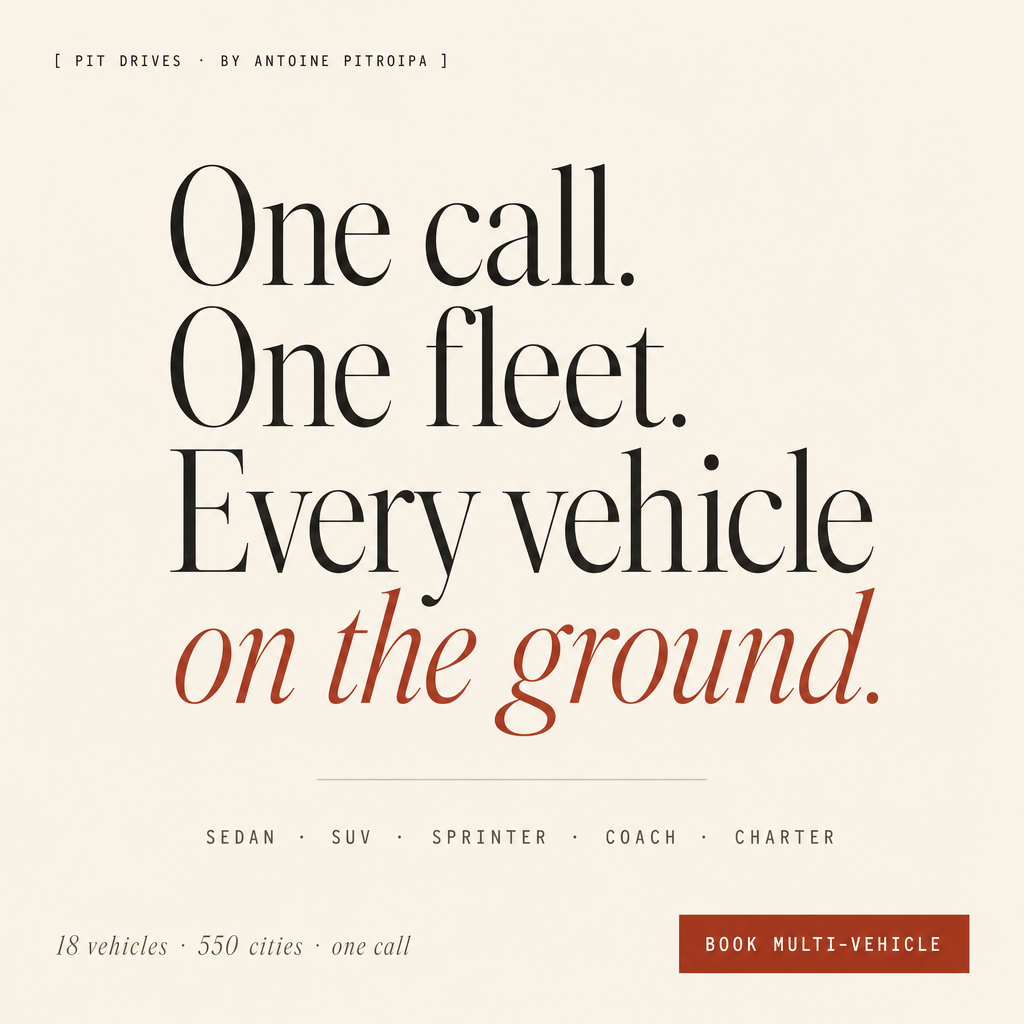
Every concept follows the same compositional grammar: PIT DRIVES eyebrow top-left, a tall serif display headline center, a hairline horizontal rule, a row of widely-tracked monospaced labels, a rust CTA rectangle bottom-right, and a quiet attribution mark bottom-left. The grammar is the brand. The headline is the wedge.
Each persona concept opens with the operating concern that gets a travel coordinator, a protocol officer, or an event lead to read past the first line. The reassurance lives below the fold in the body copy; the wedge is what gets the click.
The operating fear of the EA whose senior partner cannot miss the 7:15am DCA pickup. The promise — in one line — that this is the operator built for the trips that can't.
The line that does not need to be explained to a protocol officer at an embassy or a partner at a government-affairs firm. Six syllables that say everything the category struggles to.
The single-point-of-contact promise to an event lead coordinating fifteen vehicles for a multi-day conference. The five-vehicle-class label row underneath is the operational proof.
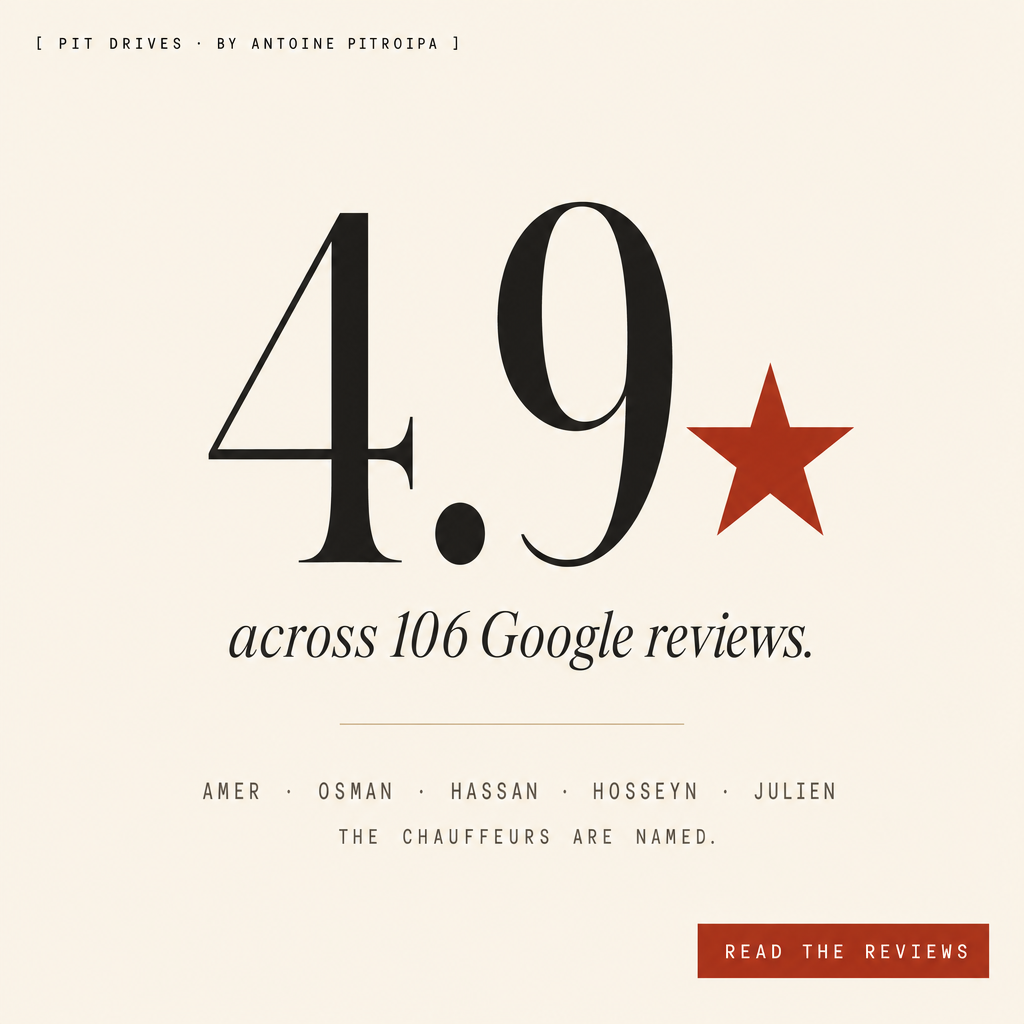
The brand-door concepts move the underleveraged reputation onto the surfaces that decide whether a first-time buyer takes Premier seriously. Used as LinkedIn cover, GBP cover, /corporate hero, email signature block, corporate one-pager pdf cover.
The asset that does the most work, made the easiest to see. The named-chauffeur row underneath ("AMER · OSMAN · HASSAN · HOSSEYN · JULIEN") is the one thing the platform aggregators structurally cannot match.
The line that lands without claiming. Reads as positioning, not pitch. Built for the /corporate hero, the LinkedIn cover, and the placement that says "this is the operator, not the service."
Operator credentials, reduced to three numbers and a place. Built for the corporate one-pager cover, the proposal-quote attachment, the LinkedIn About header image.


A single chosen wedge fans out to four placement masters, four headline variants, three primary-text bodies, two CTAs, and a matched landing-page block. The math: one direction, one production cycle, twenty-four ad assets, one conversion surface.
These concepts are creative-direction tiles, intentionally typographic to lock the voice before locking the visuals. Production frames anchor to consented photography of Antoine, named chauffeurs, real fleet vehicles, and authentic DC locations — reserved for the engagement and shot once the wedge is signed off. The category does not need stock; it needs the operator made visible.
In the scoping call we lock the two wedges to lead with (recommended default: one persona, one brand), confirm the placements to fan out to, and align on which production photography needs to be scheduled. Concept-to-production turn is ten business days for the chosen winners. The /corporate page goes live in parallel.